
- Your cart is empty
- Continue Shopping
Uncategorized
What everyone gets wrong about Cake vapes: separating real brand from copycat hype
-
By admin
- Posted on
If you’ve ever heard someone say “Cake is fake,” there’s a good chance they’re talking about the wrong thing. Cake is one of those names that outgrew the company behind it: the real brand exists, but counterfeit devices flood the market. So shoppers try one sketchy “Cake” from a gas station, have a terrible experience, and decide the whole brand is a scam. The truth is more boring and more useful: most of the drama comes from where you bought it, not what the logo says.
Why do people doubt Cake’s legitimacy?
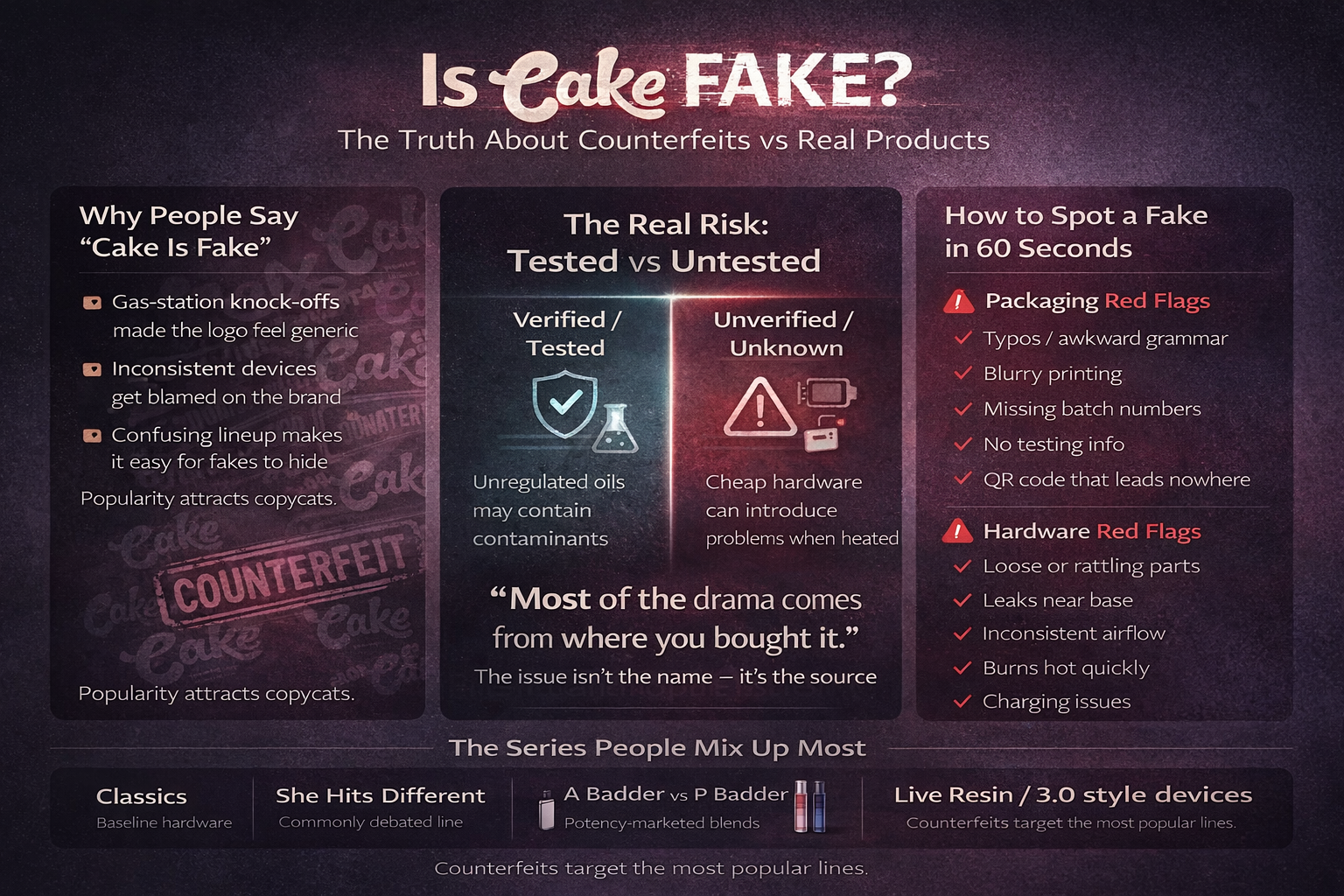
Gas-station knock-offs made the logo feel generic. When a brand name shows up everywhere, especially in places that don’t specialize in lab-tested hemp products, people assume the brand must be shady. In reality, popularity attracts copycats, and copycats chase the easiest shelves.
Inconsistent devices get blamed on the brand. Burnt taste, weak hits, clogged airflow, leaking oil, batteries that die early, those issues are common with low-quality hardware and unknown oil. Counterfeits are built to look right, not perform right.
The lineup is confusing. Cake isn’t one device. It’s multiple series with different blends and hardware, which makes it easy for counterfeiters to hide in the chaos.
The real risk: tested vs untested
Arguing “real Cake Disposable vs fake Cake Disposable” misses the bigger point. Unregulated, untested vape oils can contain contaminants or unexpected additives, and cheap hardware can introduce its own problems when heated. You don’t need to panic; you need to verify.
The Cake series people mix up the most
Knowing the common lines helps you sanity-check what you’re holding.
Classics
The “baseline” feel: straightforward flavors and familiar hardware. This is the easiest line for counterfeiters to imitate because the branding is simple, and the average buyer doesn’t know what to compare against.
She Hits Different
This name comes up frequently in debates over authenticity. It’s often linked to the message “buy from licensed sources, check lab results, avoid unverified sellers.” Counterfeits use that trust as a shield.
Badder lines: A Badder vs P Badder
Guides typically describe A Badder as a THCA + THC-P style blend and P Badder as a THC-P + HHC-P “heavy hitter” blend, usually in larger-capacity disposables. That potency marketing is exactly why fakes target these lines.
Live Resin / “3.0” style devices
Some write-ups highlight premium-positioned devices (often around 3 grams) with USB-C charging and ceramic or mesh coils. Whether the marketing terms are your thing or not, this tier should come with clearer verification, not less.
How to spot a fake Cake vape in about a minute
You’re looking for clusters of red flags. One weird detail can happen. Five weird details usually mean counterfeit.
Packaging red flags
- Typos, awkward grammar, or inconsistent fonts
- Blurry printing, low-quality cardboard, crooked labels
- No batch/lot number, or a batch number that looks stamped randomly
- No ingredients panel, no testing info, no scannable verification
- A QR code that only goes to a generic homepage (or doesn’t work)
Real packaging can change over time, but it rarely looks rushed.
Oil that looks off
Reputable oils are often clear-to-golden and move slowly. Be cautious with oil that’s unusually dark, cloudy, separated, or watery-thin. None of these alone is proof, but together they should make you pause.
Cheap hardware tells
- Mouthpiece or body pieces that wobble or rattle
- Leaks around the base or into the airflow path
- Inconsistent airflow (tight-clogged one pull, wide-open the next)
- A device that runs hot fast, or tastes burnt early
- Batteries that “charge for a few seconds” then quit, or won’t charge at all
Price cues
If the price makes you think, “Wait… how is this that cheap?” that’s the hook. Huge “bulk deals,” giant-capacity disposables for bargain prices, or constant 60% off banners are classic counterfeit tactics.
COAs: what “lab-tested” should actually mean
A Certificate of Analysis isn’t a vibe, and it isn’t a logo. It’s a batch-specific report. Here’s the quick checklist:
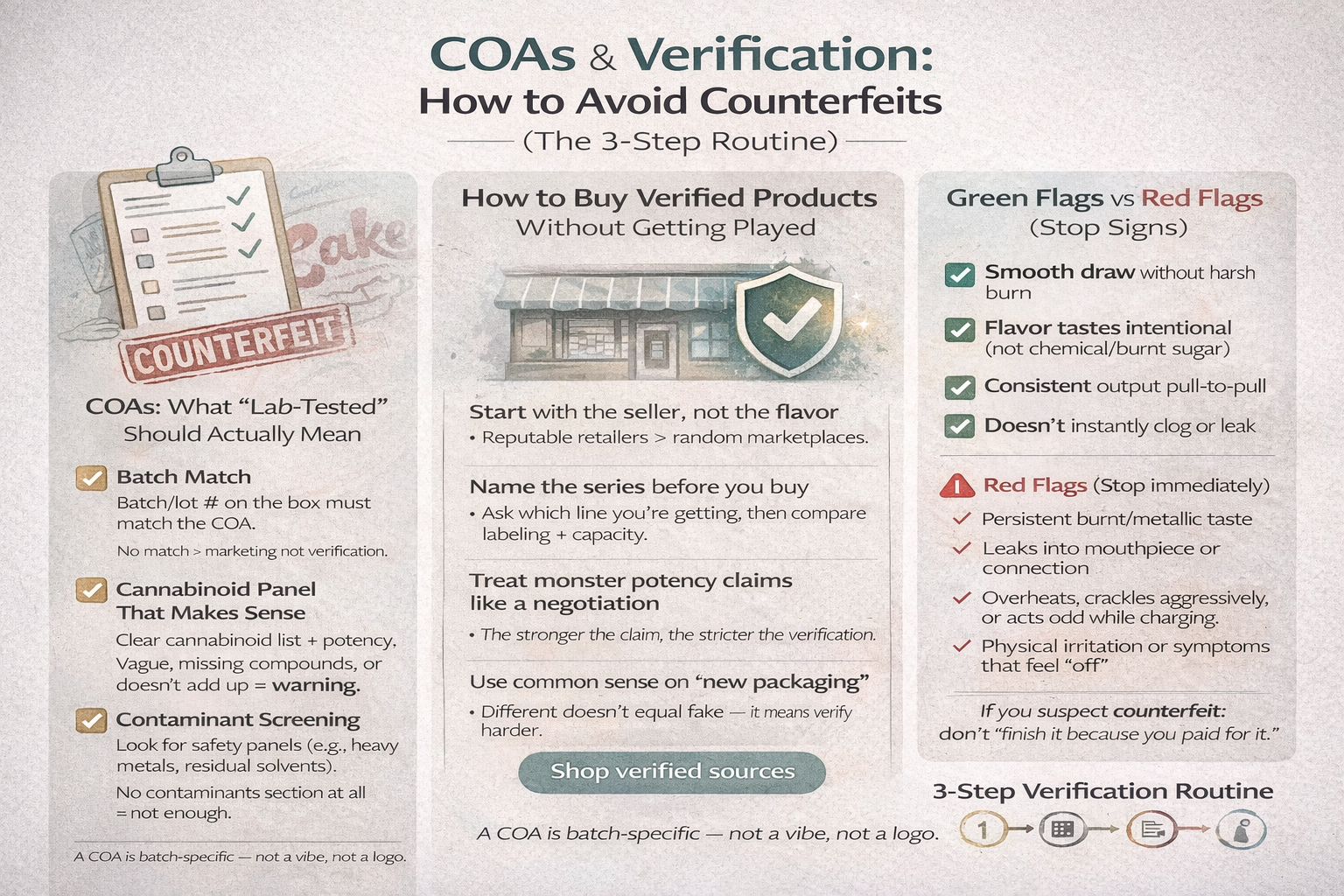
Batch match
The batch/lot number on the box should match the batch on the COA. If the seller can’t connect the report to the exact product in your hand, treat it as marketing.
Cannabinoid panel that makes sense
For hemp-derived vapes, the COA should clearly list cannabinoids and potency. If a device claims a specific blend but the report is vague, missing compounds, or doesn’t add up, that’s a warning sign.
Contaminant screening
At a minimum, you want to see common safety panels (like heavy metals and residual solvents). No contaminants section at all? That’s not enough.
QR codes that truly verify
Scan the QR. If it links to a dead page, a random PDF with no batch info, or a page that feels like a template, assume it’s decorative.
How to buy a real Cake Vape Pen without getting played
Start with the seller, not the flavor
Licensed dispensaries (where applicable) and reputable retailers are the safest move. Random marketplaces and unverified “brand direct” sites are where counterfeits thrive. If a seller refuses to talk about testing, that’s your answer.
Name the series out loud before you buy
Don’t ask for “a Cake Vape.” Ask which line: She Hits Different, Classics, A Badder, P Badder, or Live Resin/3.0. Then compare the capacity, features, and labeling to what that series is supposed to look like. This one habit prevents most confusion.
Treat “monster potency” claims like a negotiation
THC-P, HHC-P, and THCA are real compounds, but they’re also magnets for exaggerated labels. The stronger the claim, the stricter you should be about batch verification and retailer credibility.
Use common sense on “new packaging”
Counterfeiters love “new look, same great stuff” stories. If a package looks totally different from what you’ve seen before, that doesn’t automatically mean it’s fake, but it does mean you should verify harder.
What a legit device experience usually looks like
Effects vary by blend and tolerance, so focus on the basics:
Green flags
- Smooth draw without a scorching throat hit
- Flavor that tastes intentional, not like chemicals or burned sugar
- Consistent vapor from pull to pull
- Hardware that doesn’t instantly clog or leak in your pocket
Red flags that should make you stop
- Persistent burnt/metallic taste
- Oil leaking into the mouthpiece or battery connection
- A device that overheats, crackles aggressively, or behaves oddly while charging
- Physical irritation or symptoms that feel “off” compared to your normal experience
If you suspect a product is counterfeit, don’t “finish it because you paid for it.” Toss it, and take the loss as tuition.
The takeaway
Cake isn’t “fake” as a concept. What’s fake is the flood of copycat products riding on the name. If you buy from a trustworthy source, verify with a real, batch-matched COA, and learn the series names so you know what you’re comparing against, the authenticity debate gets a lot simpler: not “Is Cake legit?” but “Is this one verified?”
The myths that keep the hype cycle alive
Myth 1: “If it’s in a smoke shop, it must be fake.”
Not automatically. The point isn’t the sign on the door, it’s whether they can show batch-specific testing and explain sourcing. If a seller gets weird when you ask for COAs, move on.
Myth 2: “Real Cake always hits the same.”
Different series can feel totally different. A “Classics” blend won’t match a Badder line built around THC-P/THCA, and your tolerance changes the rest. Compare like with like.
Myth 3: “The strongest one is the real one.”
Counterfeiters love this. They’ll print the wildest potency language because it sells. Authenticity is proven by traceability.
A 3-step verification routine
1) Inspect before you pay
Check print quality, seals, and whether the package has a batch/lot number plus a scannable path to testing. If it looks low-effort, walk.
2) Scan and cross-check
Open the COA, confirm the batch matches, then skim: clear cannabinoid listing and at least basic contaminant screening. A QR that dumps you on a generic site is decoration.
3) Judge the first five pulls
A fresh coil can taste a little “new” on pull one, but by pull three to five, you should get a clean flavor and stable airflow. If it’s harsh, metallic, or leaking early, stop.
Quick FAQ
Why do some people swear by Cake while others hate it?
They’re often reviewing different realities: real vs knockoff, or one series vs another.
What if I already bought one and I’m not sure?
Verify the batch/COA immediately. If you can’t, treat it as unverified and don’t use it. Then fix the real problem, your source, and keep receipts when possible, too.
