
- Your cart is empty
- Continue Shopping
Cake Disposables Review
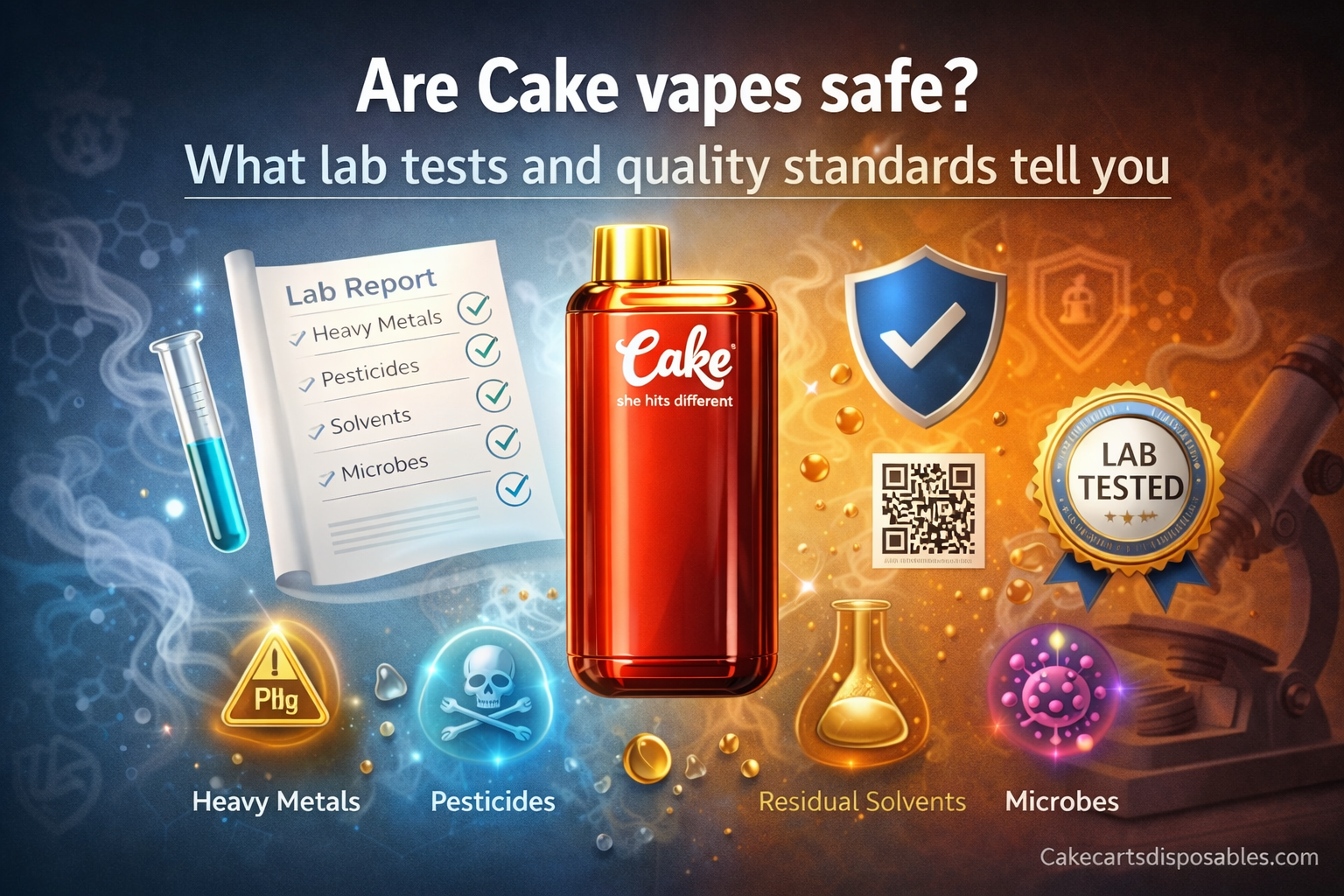
Are Cake vapes safe? What lab tests and quality standards tell you
-
By admin
- Posted on
Are Cake Disposables Safe? What lab tests and quality standards tell you
Are Cake Disposables Safe is the question many buyers ask before they try a hemp-derived disposable vape. Lab testing, Certificates of Analysis (COAs), and simple product checks give the clearest answer: authentic, lab-verified Cake disposables that pass standard tests are far safer than untested or counterfeit products—but you still need to know what to look for.
Why lab testing matters for disposable vapes
Vaping oils can carry contaminants—from residual solvents used in extraction to pesticides, heavy metals, or even toxic cutting agents. Independent third-party testing identifies those hazards and confirms cannabinoid potency and terpene profiles. Public health agencies have linked unregulated or contaminated products to lung injury outbreaks, so COAs are more than marketing: they are safety documentation. See the CDC guidance on vaping risks for background information: CDC – Electronic Nicotine Delivery Systems.
Key tests a trustworthy COA should include
- Potency profile — measured amounts of cannabinoids (THC, Delta‑8, Delta‑9, HHC, THCa, etc.).
- Residual solvents — GC‑MS results for solvents like butane, ethanol, or propane; should be below allowable limits.
- Pesticide screen — LC‑MS/MS panel showing non-detect or levels within safety thresholds.
- Heavy metals — ICP‑MS results for lead, arsenic, cadmium, mercury should be under action limits.
- Microbial/mycotoxin tests — confirming absence of harmful bacteria, mold, or mycotoxins.
- Terpene report — a profile that matches the advertised flavor and helps confirm formulation authenticity.
How to read a Cake COA and what to verify
When reviewing a COA, check these items:
- Lab identity and accreditation — an independent, accredited lab (look for ISO or similar credentials).
- Batch or lot number — it must match the number on the product packaging.
- Date and method details — recent testing using standard methods (GC/MS, LC/MS, ICP‑MS).
- Pass/fail results for pesticides, solvents, and heavy metals — values should be listed with units and limits.
If a COA is missing or the lab looks questionable, treat the product as unverified. Many brands post COAs online; if you find a Cake product without a COA, ask the seller for it or buy elsewhere.
Common contaminants and health risks
Past investigations into vaping-related lung injury found harmful additives like vitamin E acetate among illegal products. Other risks include solvent residues, pesticide exposure, and heavy metal contamination. The FDA provides updates and safety alerts related to vape products and contaminants here: FDA – Vape Pens, Cartridges, and Pod Systems.
Fake vs. real Cake disposables — red flags
Counterfeits are a major concern. Look for these signs of fake or low-quality disposables:
- Missing or unverifiable COA, QR code, or batch number.
- Poor packaging quality, misspellings, or different logos than the brand’s site.
- Very low price compared with reputable retailers.
- Oil that is unusually dark, cloudy, or smells chemical-like.
- Device performance issues: severe leaking, inconsistent draw, or excessive harshness.
Buying from licensed retailers or verified online stores reduces the odds of getting a fake. For product browsing, the official category page for Cake disposables can help you compare models: Cake Bar Disposable. For more brand details and storefront options, see Cake Disposable She Hits Different.
Device safety and user precautions
Beyond oil chemistry, device safety matters. Follow these precautions:
- Use the device as intended — don’t modify or refill single‑use disposables.
- Charge only with the recommended charger if the device is rechargeable; avoid overcharging.
- Store in a cool, dry place away from direct sunlight to limit degradation of cannabinoids and terpenes.
- Stop use and seek medical help if you experience severe coughing, chest pain, or trouble breathing after vaping.
Practical checklist before you buy
- Verify a current COA from an independent lab that matches the product lot.
- Confirm the seller is reputable and ideally licensed.
- Inspect packaging for matching batch numbers, QR codes, and clear ingredient labeling.
- Avoid suspiciously cheap offers and unknown vendors.
- Ask customer service for testing details if anything is unclear.
Final takeaways on safety
Are Cake Disposables Safe? When sourced from legitimate sellers and backed by verifiable COAs showing clean results for pesticides, solvents, and heavy metals, Cake disposables are held to industry testing standards that significantly reduce risk. However, untested or counterfeit products remain dangerous. Use COAs, vendor reputation, and basic product inspection as your safety filters before buying or using any disposable vape.
